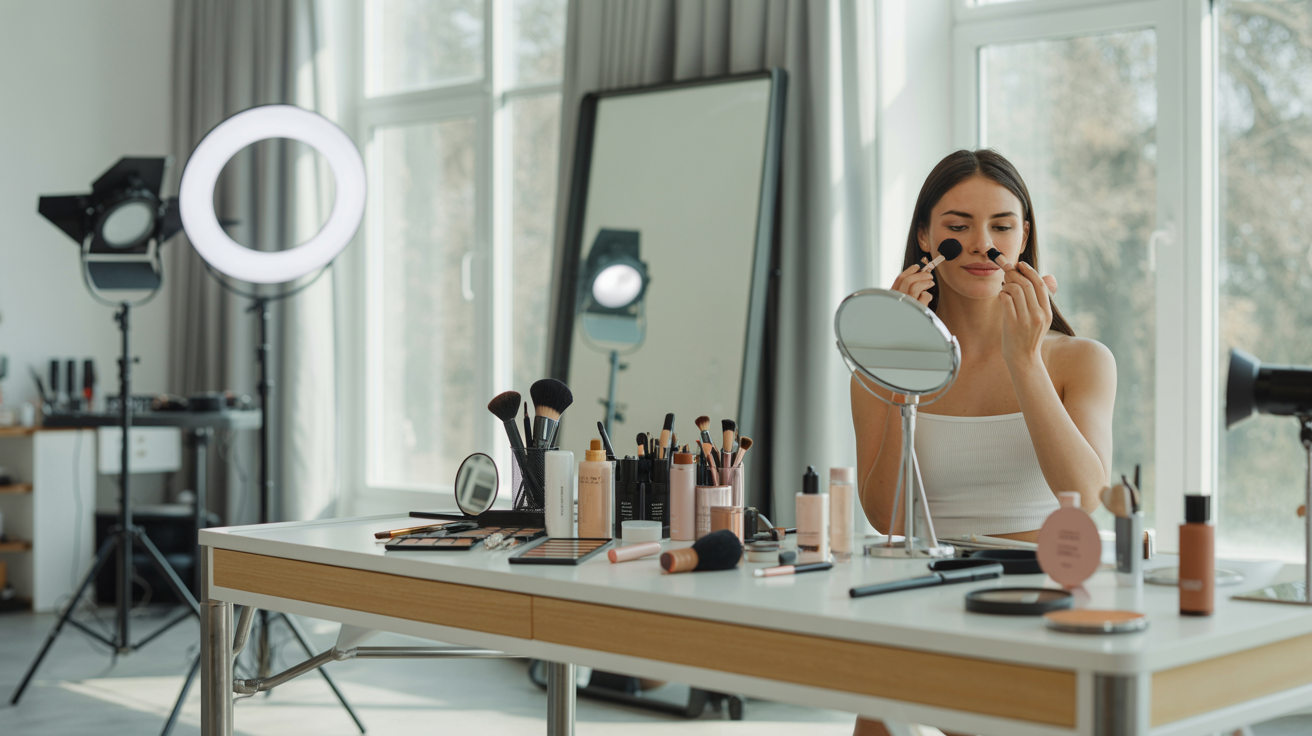

Self-presentation is one of the most underrated professional skills of the modern era. In a world where your LinkedIn headshot, your Zoom background, your Instagram grid, and your in-person handshake all contribute to a single, unified impression of who you are — the ability to present yourself confidently and consistently across every context is no longer optional. It is a core competency for anyone who wants to be taken seriously, build a strong personal brand, or grow a business.
And yet most people treat self-presentation as a collection of disconnected tasks: they get a headshot taken once every few years, they show up to video calls without thinking about their framing, and they walk into meetings without any intentional preparation. The result is a fragmented, inconsistent impression that undermines the credibility they've worked hard to build.
This guide is about changing that. Whether you're a professional building a personal brand, a small business owner whose face is the face of your company, a content creator growing an audience, or simply someone who wants to show up more confidently in every context — this is your complete framework for self-presentation mastery. We'll cover professional photos, video calls and webinars, in-person meetings, and how to build a consistent presence that works across all three.
What Self-Presentation Really Means (And Why It's a Skill, Not a Trait)
Most people think of self-presentation as something you either have or you don't — a natural charisma, an innate photogenic quality, a born confidence. This is a myth that holds a lot of talented people back.
Self-presentation is a skill. Like any skill, it can be learned, practiced, and improved. The people who seem effortlessly confident in photos, on video, and in person have almost always put deliberate effort into developing that presence — they've learned what works for their face and body, they've practiced their expressions and posture, and they've built habits that make confident self-presentation feel natural.
Understanding this is the first step. The second step is understanding what self-presentation actually consists of.
The Three Pillars: Visual, Verbal, and Non-Verbal
Self-presentation operates across three distinct channels simultaneously:
Visual presentation is everything people can see: your appearance, your clothing, your grooming, your environment (in photos and video), and the quality of your images. Visual presentation is the channel most people think about when they think about self-presentation — but it's only one-third of the picture.
Verbal presentation is what you say and how you say it: your word choice, your tone of voice, your pace, your clarity, and the stories and examples you use to communicate your value. In written contexts (bios, captions, email), verbal presentation is entirely about word choice. In video and in-person contexts, it also includes vocal quality and delivery.
Non-verbal presentation is everything else: your posture, your facial expressions, your eye contact, your gestures, your energy, and the micro-signals you send through your body language. Research consistently shows that non-verbal communication accounts for the majority of the impression you make — often more than 60% of how you're perceived in face-to-face and video contexts.
Mastering self-presentation means developing all three channels — and ensuring they're aligned. When your visual presentation says "professional and polished" but your body language says "nervous and uncertain," people pick up on the contradiction even if they can't articulate it. Alignment across all three channels is what creates the impression of genuine, effortless confidence.
Why Consistency Across Contexts Builds Trust
There's a psychological principle at work in self-presentation that most people don't consciously recognize: consistency builds trust. When someone encounters you in multiple contexts — they see your LinkedIn photo, then join a video call with you, then meet you in person — and you look and feel like the same person in all three contexts, it creates a powerful sense of authenticity and reliability.
Conversely, when there's a significant gap between your online presence and your in-person reality — when your headshot looks nothing like you, or when your polished Instagram grid doesn't match the nervous, unprepared person who shows up to meetings — it creates cognitive dissonance that erodes trust.
This is why self-presentation mastery isn't just about looking good in photos. It's about building a coherent, consistent identity that holds up across every context where people encounter you.
Projecting Confidence in Professional Photos
Professional photos — headshots, brand photos, team photos, social media images — are often the first point of contact between you and your audience. They're also the context where most people feel the least confident, because being photographed feels unnatural and high-stakes.
The good news: the confidence you project in photos is almost entirely within your control. It's not about how you look — it's about how you prepare, how you carry yourself, and how you engage with the camera.
Pre-Shoot Mental Preparation
The biggest mistake people make before a photoshoot is showing up without any mental preparation. They arrive stressed, self-conscious, and focused on everything that could go wrong — and that anxiety shows up in every frame.
Professional models and experienced executives who photograph well consistently have one thing in common: they prepare mentally before the shoot. Here's a simple pre-shoot mental preparation routine that works:
1. Clarify your intention. Before the shoot, spend five minutes thinking about the impression you want to create. Not "I want to look good" — that's too vague. Instead: "I want to look approachable and competent for my LinkedIn audience" or "I want to project warmth and expertise for my brand photos." A clear intention gives you something to focus on during the shoot instead of your self-consciousness.
2. Review your best photos. Look at photos of yourself that you genuinely like — photos where you feel you look natural, confident, and like yourself. This primes your brain with a positive self-image and helps you access that energy during the shoot.
3. Do a brief visualization. Close your eyes and spend two minutes visualizing the shoot going well. See yourself relaxed, smiling naturally, moving comfortably. Visualization is a technique used by elite athletes and performers to prime peak performance — it works for photoshoots too.
4. Arrive early. Rushing to a photoshoot is one of the fastest ways to undermine your confidence. Arrive 10-15 minutes early, take a few deep breaths, and give yourself time to settle into the space before the camera comes out.
Physical Warm-Up Techniques
Your body holds tension in ways you're often not aware of — and that tension shows up in photos as stiffness, awkwardness, and a general sense of discomfort. A brief physical warm-up before a shoot can make a dramatic difference in how natural and relaxed you look.
Shake it out. Literally shake your hands, arms, and shoulders for 30 seconds. This releases physical tension and helps your body feel more fluid and relaxed.
Facial warm-up. Make exaggerated facial expressions — big smiles, wide eyes, scrunched faces — for 30 seconds. This warms up your facial muscles and makes it easier to produce natural, genuine expressions on command.
Posture reset. Stand tall, roll your shoulders back and down, and take three deep breaths. This activates your postural muscles and helps you maintain confident, open body language throughout the shoot.
Walk around. If possible, walk around the shooting space for a few minutes before the camera comes out. Movement helps release nervous energy and makes you feel more comfortable in the environment.
The Power Pose Reset
Research on "power posing" — adopting expansive, open body postures before high-stakes situations — has shown that it can meaningfully affect both how you feel and how you're perceived. Before a photoshoot (or any high-stakes self-presentation moment), try this:
Stand with your feet shoulder-width apart, hands on your hips, chin slightly up, and chest open. Hold this posture for two minutes. This "power pose" has been shown to increase feelings of confidence and reduce stress hormones. It's a simple, evidence-based technique that takes two minutes and costs nothing.
Ready to take your professional photos to the next level? Glowup is an AI photo platform that transforms your photos into polished, professional images — perfect for LinkedIn, brand photos, social media, and more. Try it free at glowuplab.app.
Mastering Your On-Camera Presence for Video Calls and Webinars
Video calls have become one of the primary contexts in which professional relationships are built and maintained. Your on-camera presence — how you look, sound, and carry yourself on video — is now a core professional skill. And yet most people have never deliberately worked on it.
Eye Contact and Camera Positioning
The single most impactful thing you can do to improve your video presence is to look at the camera, not at the screen. When you look at the screen (where the other person's face appears), you appear to be looking slightly downward or to the side — which reads as evasive or disengaged. When you look at the camera lens, you appear to be making direct eye contact — which reads as confident, engaged, and trustworthy.
This takes practice because it feels unnatural. You want to see the person you're talking to. But the discipline of looking at the camera — especially when you're speaking — is one of the most powerful things you can do for your video presence.
Camera positioning matters too. Position your camera at eye level or very slightly above. A camera positioned below eye level (looking up at you) is unflattering and creates a sense of dominance imbalance. A camera at eye level creates a natural, conversational feel. If you're using a laptop, prop it up on books or a stand to get the camera to the right height.
Voice, Pace, and Energy on Video
Video calls compress and flatten energy. What feels like a normal, engaged energy level in person often reads as flat and low-energy on video. To compensate, you need to consciously bring slightly more energy, expressiveness, and vocal variety to video calls than you would in person.
Speak slightly more slowly and clearly than you would in person — video compression can make fast speech harder to follow. Vary your vocal tone and pace to maintain engagement. Use pauses deliberately — a brief pause before making an important point creates emphasis and signals confidence.
Smile more than you think you need to. On video, a neutral expression often reads as serious or disengaged. A warm, engaged expression — even a slight smile — reads as approachable and positive.
Background and Framing as Confidence Signals
Your background and framing on video calls are part of your self-presentation, whether you think about them that way or not. A cluttered, chaotic background signals disorganization. A dark, poorly lit frame signals that you don't take the call seriously. A clean, well-lit, thoughtfully framed shot signals professionalism and intentionality.
Background: Choose a clean, uncluttered background. A plain wall, a tidy bookshelf, or a simple office environment all work well. If your actual background isn't ideal, a virtual background (used thoughtfully) can work — but avoid obviously fake or distracting virtual backgrounds.
Lighting: Position a light source in front of you, not behind you. A window with natural light, or a simple ring light, positioned at eye level in front of your face, will dramatically improve how you look on video.
Framing: Position yourself so your face and upper chest fill roughly the upper two-thirds of the frame. Too much headroom above you looks awkward; being cut off at the chin looks cramped. The "talking head" framing — face and shoulders centered in the frame — is the standard for a reason: it works.
In-Person Self-Presentation: First Impressions That Last
Despite the rise of digital communication, in-person first impressions remain extraordinarily powerful. Research shows that people form lasting impressions within the first seven seconds of meeting someone — and that these impressions are remarkably resistant to revision, even in the face of contradictory evidence.
Entrance and Posture
How you enter a room sets the tone for every interaction that follows. People who enter confidently — walking at a measured pace, with upright posture and an open, engaged expression — are immediately perceived as more competent and credible than those who enter tentatively or with closed, hunched body language.
Practice your entrance. This sounds theatrical, but it works. Before walking into a meeting, a networking event, or any high-stakes in-person interaction, take a moment to reset your posture: feet shoulder-width apart, shoulders back and down, chin level, chest open. Take a breath. Then walk in with intention.
Posture is one of the most powerful non-verbal signals you send. Upright, open posture communicates confidence, competence, and engagement. Hunched, closed posture communicates insecurity, disengagement, or stress. The good news: posture is entirely within your control, and improving it is a matter of habit and awareness.
Handshakes, Eye Contact, and Micro-Expressions
The handshake is one of the most studied non-verbal signals in professional contexts. Research consistently shows that a firm, confident handshake — not crushing, but solid and intentional — creates a significantly more positive first impression than a weak or limp handshake. Pair your handshake with direct eye contact and a genuine smile, and you've made a powerful first impression in under three seconds.
Eye contact is a nuanced skill. Too little eye contact reads as evasive or unconfident. Too much reads as aggressive or intense. The sweet spot is maintaining eye contact roughly 60-70% of the time when listening, and slightly less when speaking. This feels natural and engaged without being overwhelming.
Micro-expressions — the brief, involuntary facial expressions that flash across your face in response to emotions — are processed unconsciously by the people you interact with. You can't fully control your micro-expressions, but you can influence them by genuinely engaging with the people you're meeting. When you're actually interested in someone, your face shows it — and people respond to that authenticity.
Dressing for the Impression You Want to Make
Clothing is one of the most powerful and controllable elements of in-person self-presentation. Research on "enclothed cognition" shows that what you wear affects not just how others perceive you, but how you perceive yourself — and therefore how you perform. Dressing intentionally for the impression you want to make is both a signal to others and a tool for your own confidence.
The principle is simple: dress slightly more formally than the context requires. This doesn't mean wearing a suit to a casual meeting — it means being the most polished version of whatever the dress code is. In a casual environment, wear clean, well-fitted casual clothes. In a business casual environment, wear clothes that are clearly intentional and well-maintained. In a formal environment, invest in quality pieces that fit well.
Fit is more important than price. A well-fitted outfit from a mid-range brand will always look more polished than an expensive outfit that doesn't fit properly. If you're investing in your wardrobe, invest in tailoring before you invest in labels.
Building a Consistent Self-Presentation Identity Across All Platforms
The most powerful self-presentation isn't just about performing well in any single context — it's about building a coherent identity that holds up consistently across photos, video, and in-person interactions.
Aligning Your Photos, Video, and In-Person Presence
Start by auditing your current self-presentation across contexts. Look at your professional headshot, your most recent video call screenshot, and think about how you typically show up in person. Ask yourself:
- Do these three representations of me feel like the same person?
- Is the energy, expression, and overall impression consistent?
- Would someone who met me in person recognize me from my headshot?
- Does my online presence accurately represent how I show up in real life?
If there are significant gaps, identify which context is closest to the impression you want to create — and work to bring the others into alignment with it.
The Role of AI Photo Tools in Consistent Branding
One of the practical challenges of consistent self-presentation is that professional photos are expensive and time-consuming to produce. Most people update their headshots infrequently — sometimes going years between professional photo sessions — which means their online presence gradually falls out of sync with how they actually look and present themselves.
AI photo platforms like Glowup have changed this equation. With Glowup, you can transform everyday photos into polished, professional-quality images — headshots, brand photos, social media images — without booking a photographer or renting a studio. This makes it practical to keep your visual self-presentation current and consistent across all platforms, updating your photos as your look, role, or brand evolves.
For small business owners, this is particularly valuable. Your team's photos, your product images, and your brand visuals all contribute to the impression your business makes — and keeping them current and consistent is a meaningful competitive advantage.
Self-Presentation for Small Business Owners and Entrepreneurs
For small business owners and entrepreneurs, self-presentation takes on an additional dimension: your personal presence is often inseparable from your brand. When you're the face of your business — whether you're a consultant, a creative professional, a service provider, or a founder — how you present yourself directly affects how your business is perceived.
Why Your Personal Presence IS Your Brand
People don't just buy products and services — they buy from people they trust. And trust is built, in large part, through consistent, credible self-presentation. Your headshot on your website, your presence on video calls with clients, your appearance at industry events — all of these contribute to the impression your business makes.
This means that investing in your self-presentation isn't vanity — it's a business decision. A polished, professional headshot on your website signals that you take your business seriously. A confident, well-prepared presence on client video calls signals that you're reliable and competent. A consistent visual identity across your website, social media, and marketing materials signals that you're an established, trustworthy business.
The return on investment for self-presentation improvements is often surprisingly high. A better headshot can increase website conversion rates. A more confident video presence can improve client retention. A more polished in-person presence can open doors at networking events. These aren't soft, unmeasurable benefits — they're real business outcomes.
Practical Steps to Audit and Upgrade Your Presence
Here's a practical framework for auditing and upgrading your self-presentation as a small business owner:
Step 1: Audit your visual presence. Look at every place your photo appears online — your website, LinkedIn, Google Business profile, social media accounts, email signature. Are these photos consistent? Do they look professional? Are they current? If not, updating them is your highest-leverage first step.
Step 2: Audit your video presence. Join a video call and look at yourself on screen. Is your lighting good? Is your background clean and professional? Is your camera at eye level? Are you framed well? Make the technical improvements first — they're quick and have an immediate impact.
Step 3: Audit your in-person presence. Think about the last few in-person interactions you had in a professional context. How did you enter the room? How was your posture? How did you introduce yourself? Were you dressed appropriately for the context? Identify one or two specific things to improve.
Step 4: Build a self-presentation maintenance routine. Schedule a quarterly review of your professional photos to ensure they're current. Build a pre-meeting preparation habit (posture reset, mental preparation). Invest in one or two high-quality wardrobe pieces per season that elevate your professional appearance.
Common Self-Presentation Mistakes (And How to Fix Them)
Even people who care about self-presentation make predictable mistakes. Here are the most common ones — and how to fix them:
Mistake 1: Outdated photos. Using a headshot that's more than two years old, or that looks significantly different from how you currently look, creates a jarring disconnect when people meet you in person or on video. Fix: Update your professional photos at least every two years, or whenever your appearance changes significantly. AI photo tools make this faster and more affordable than ever.
Mistake 2: Inconsistent visual identity. Using different photos on different platforms — a formal headshot on LinkedIn, a casual selfie on Instagram, a group photo on your website — creates a fragmented impression. Fix: Choose one or two high-quality photos that represent you well and use them consistently across all professional platforms.
Mistake 3: Neglecting video presence. Showing up to video calls with poor lighting, a cluttered background, or a camera positioned at an unflattering angle. Fix: Spend 30 minutes setting up a dedicated video call space with good lighting, a clean background, and a camera at eye level. This one-time investment pays dividends on every call.
Mistake 4: Closed body language. Crossing arms, hunching shoulders, avoiding eye contact, or making yourself physically small in photos and in person. Fix: Practice open, expansive body language deliberately. Stand tall, keep your arms uncrossed, make eye contact, and take up the space you're entitled to.
Mistake 5: Neglecting the transition between contexts. Looking polished in photos but showing up to meetings unprepared, or being great in person but having a weak online presence. Fix: Treat self-presentation as a holistic practice, not a collection of disconnected tasks. Invest in all three channels — visual, verbal, and non-verbal — across all three contexts.
Mistake 6: Waiting until you feel confident. Many people put off investing in their self-presentation because they don't feel confident enough yet — they'll get better photos when they lose weight, update their wardrobe when they get a promotion, work on their video presence when they have more time. Fix: Confidence follows action, not the other way around. Start with the smallest possible improvement — better lighting on your next video call, a posture reset before your next meeting — and build from there.
Conclusion: Self-Presentation as a Lifelong Practice
Self-presentation mastery isn't a destination — it's a practice. The most compelling, credible, and confident people you know didn't arrive at their presence overnight. They built it deliberately, over time, through consistent attention to how they show up in photos, on video, and in person.
The framework in this guide gives you everything you need to start: the three pillars of self-presentation, practical techniques for photos, video, and in-person contexts, a system for building consistency across all three, and a clear-eyed look at the most common mistakes to avoid.
Start with one thing. Improve your lighting on your next video call. Do the power pose before your next photoshoot. Reset your posture before your next meeting. Small, consistent improvements compound over time into a dramatically stronger overall presence.
And when you're ready to upgrade your visual self-presentation — your headshots, brand photos, and social media images — Glowup makes it easy. Our AI photo platform transforms your everyday photos into polished, professional images that represent you at your best — for LinkedIn, your website, social media, and anywhere else your presence matters. Sign up at glowuplab.app/signup and see the difference a great photo makes.